
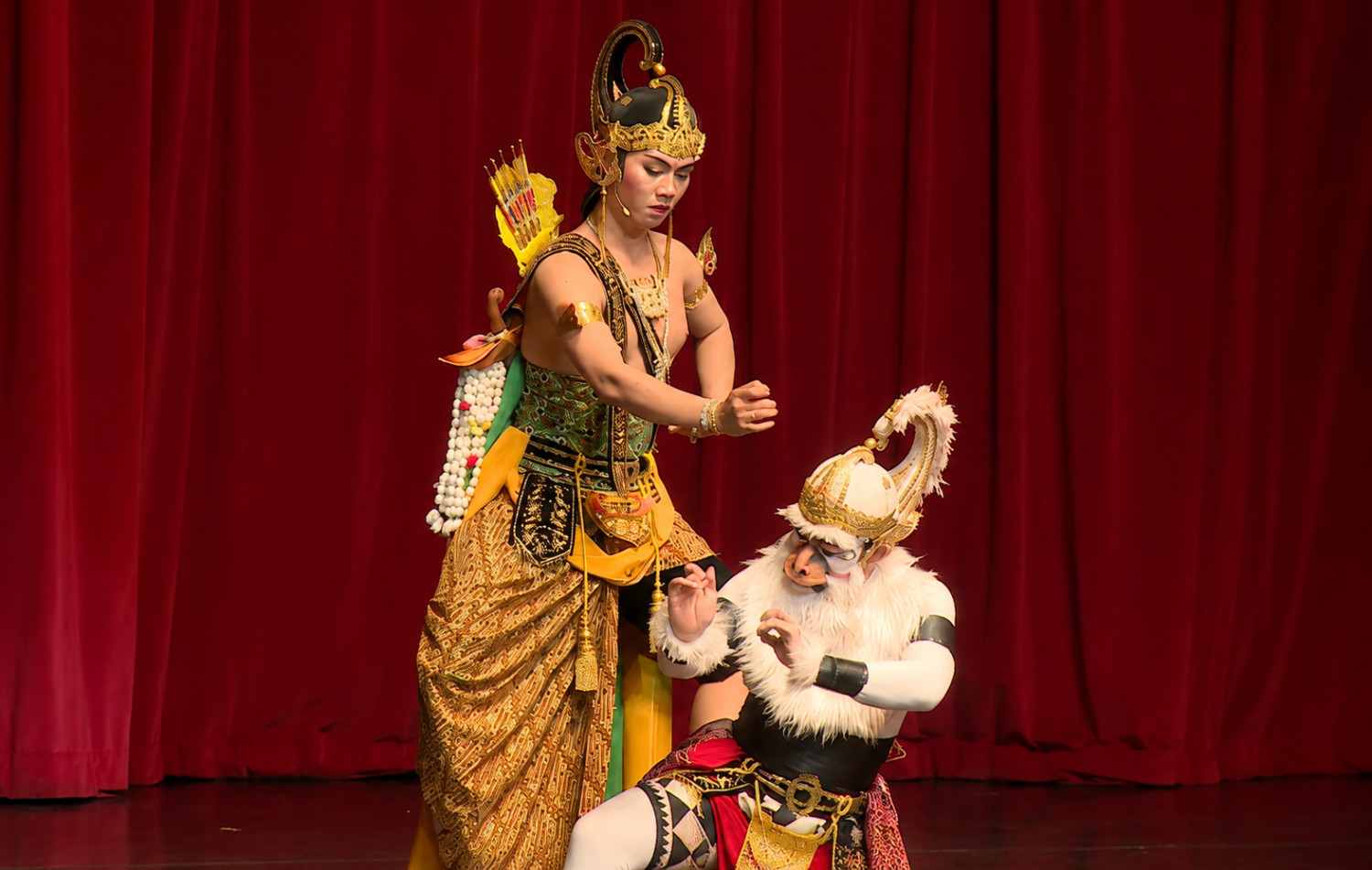
Rama Sita Dance Performance and the Ramayana Ballet at Prambanan

September 18, 2026
The Rama Sita dance performance offers visitors a beautiful way to explore Javanese culture through traditional dance, music, costumes, and storytelling. In Yogyakarta, one of the best-known performances connected with the story of Rama and Sita is the Ramayana Ballet at Prambanan. The production presents the ancient epic through dance and drama without spoken dialogue.
The Story of Rama and Sita
The Ramayana tells the story of Rama and Sita, whose journey becomes the central theme of the performance. Rama is portrayed as a heroic prince, while Sita, also known as Sinta in Java, plays a central role in the story. Their relationship faces a major challenge when Sita is kidnapped by Rahwana, the king of Alengka.
Rama then begins a journey to rescue Sita. Lakshmana supports him, while Hanuman becomes an important ally during the search and the eventual conflict. The story includes battles, loyalty, courage, sacrifice, and the struggle between good and evil.
At Prambanan, dancers communicate these events through carefully controlled movements, gestures, facial expressions, and choreography. Gamelan music supports the scenes and helps establish the mood throughout the performance. The official tourism information describes the production as a dialogue-free dance drama adapted to Javanese culture.
Javanese Dance and Traditional Music
The Ramayana Ballet does more than retell an ancient story. It introduces visitors to elements of Javanese performing arts. Dancers use distinctive movements to express emotions and relationships between characters. Detailed costumes also help audiences identify the different figures in the story.
Gamelan provides another important part of the performance. The traditional ensemble creates rhythms that can shift from gentle scenes to dramatic battles. Together, dance and music create a visual and musical presentation that does not require spoken dialogue.
The Prambanan Ramayana Ballet has been performed since 1961. The official ticket information states that more than 200 dancers and musicians have participated in the production over its history.
Watching the Performance at Prambanan
The outdoor performance offers a distinctive setting because Prambanan Temple stands behind the stage. Evening lighting highlights the dancers while the temple creates a dramatic silhouette in the background.
For 2026, the official schedule lists the outdoor Ramayana Ballet at the Open Air Theatre from May through October. Performances take place on Tuesdays, Thursdays, and Saturdays from 7:30 PM to 9:00 PM. The schedule can change, so visitors should confirm the latest information before planning their visit.
Travelers who want more information about the storyline, schedule, tickets, and venues can read this complete guide to the Ramayana Ballet in Yogyakarta.
Tips for Enjoying the Dance Performance
Knowing the basic story before attending can make the show easier to follow. Since the dancers do not rely on spoken dialogue, recognizing Rama, Sita, Rahwana, Lakshmana, and Hanuman provides useful context.
Visitors should also check the performance venue before leaving for Prambanan. Outdoor shows can move to the Trimurti Indoor Theatre if rain occurs before the performance begins. The official ticket information also recommends arriving 30–45 minutes before the scheduled starting time.
For a wider Yogyakarta itinerary, travelers can explore Yogyakarta travel experiences and combine Prambanan with other cultural attractions.
The Rama Sita dance performance brings an ancient story into a living Javanese artistic tradition. Through graceful movement, gamelan music, expressive costumes, and dramatic storytelling, the Ramayana Ballet creates a cultural experience that connects visitors with Yogyakarta’s rich heritage.
