
Taman Sari Yogyakarta History: A Look at Its Royal Past

September 28, 2026
Learning about Taman Sari Yogyakarta history can make a visit to this famous attraction more meaningful. Located near the Yogyakarta Palace, Taman Sari is a historic royal complex known for its water features, distinctive architecture, underground passages, and connections to the Sultanate.
Although only parts of the original complex remain today, the surviving structures provide an opportunity to understand how the royal environment of Yogyakarta developed in the eighteenth century.
The Beginning of Taman Sari
Taman Sari was developed during the reign of Sultan Hamengku Buwono I. Historical records from the Yogyakarta Cultural Office place the beginning of its construction in the eighteenth century, with development continuing across several stages.
The original complex was considerably larger than the area visitors see today. It included gardens, buildings, waterways, bathing facilities, and structures designed for different royal activities.
The name Taman Sari is commonly associated with a beautiful garden. Its original design reflected the importance of water and landscaped spaces within the royal complex.
Travelers who want a broader overview can explore this Taman Sari Water Castle complete guide before planning their visit.
A Royal Retreat in Yogyakarta
One important part of Taman Sari Yogyakarta history is its role as a royal retreat. The complex was connected to the Sultan and members of the royal family.
Different areas served different purposes. Some sections were designed for relaxation, while others supported administrative, residential, or defensive functions.
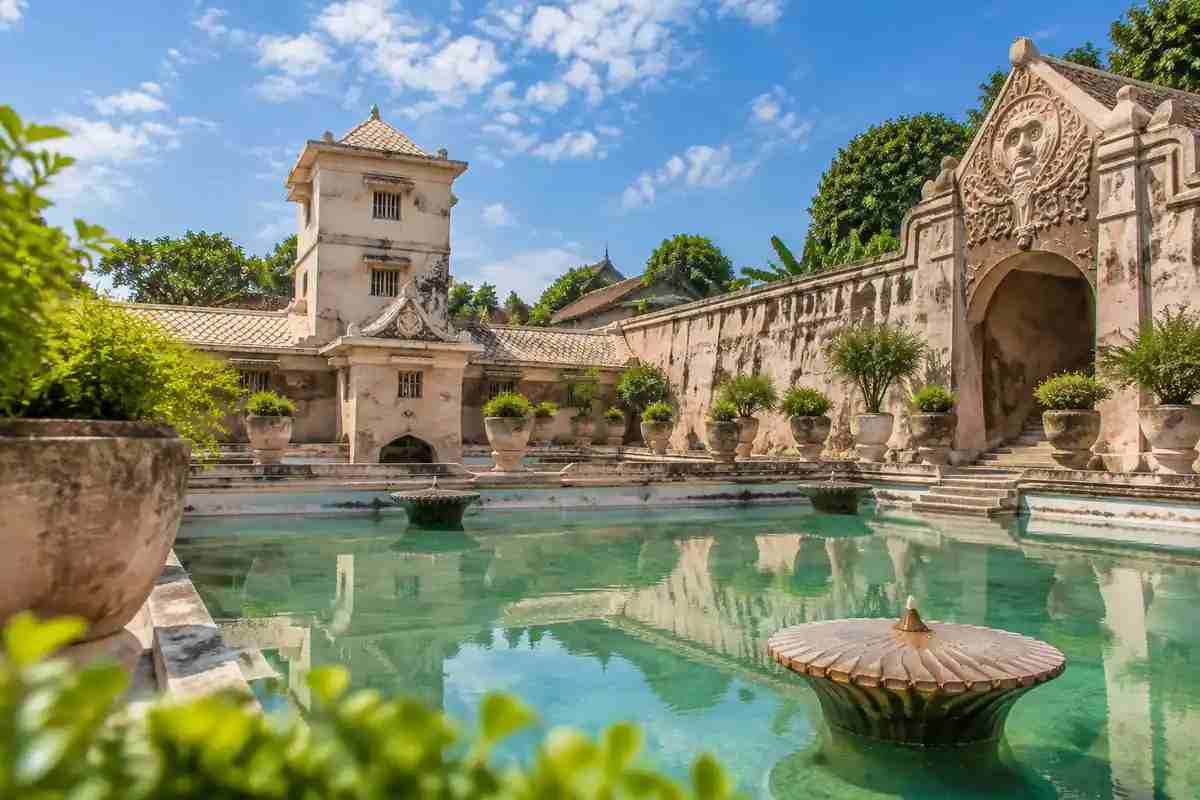
The bathing complex, known as Pasiraman Umbul Binangun, is one of the most recognizable surviving areas. Its pools and surrounding structures show how water became an important element of the site’s architecture.
The complex therefore functioned as more than a decorative garden. It was a carefully planned environment containing spaces with different roles.
The Original Water Landscape
Water played a major role in the original design of Taman Sari. Historical descriptions refer to Segaran, an artificial lake that once surrounded several parts of the complex.
Pulo Kenanga was positioned within this former water landscape. Visitors today can see the surviving structure, but the surrounding area has changed significantly from its historical appearance.
The presence of waterways explains the site’s popular English name, Water Castle. The combination of water, gardens, walls, and buildings created a distinctive royal landscape.
Explore the Underground Structures
Another interesting element of Taman Sari Yogyakarta history is its network of underground passages. These routes connected different areas within the wider complex.
Some surviving passages can still be explored today. Their existence demonstrates that Taman Sari was designed with connections between its structures rather than as a collection of isolated buildings.
Sumur Gumuling is particularly notable. Its circular form and unusual interior arrangement make it one of the most distinctive structures within the complex.
Architectural Influences
Taman Sari also demonstrates the combination of different architectural influences. Its buildings contain elements associated with Javanese traditions alongside features that reflect outside influences.
This combination gives the complex a distinctive visual character. Decorative details, thick walls, gates, pools, and unusual building layouts all contribute to its identity.
Rather than following one architectural style completely, Taman Sari reflects the cultural interactions that shaped Yogyakarta during its historical development.
Visiting Taman Sari Today
Understanding Taman Sari Yogyakarta history can help visitors appreciate details that may otherwise be overlooked. Take time to observe the bathing pools, gates, underground passages, and remaining structures.
Comfortable footwear is useful because exploring the complex involves walking through several areas.
Travelers planning other cultural experiences in Yogyakarta and Central Java can also consider Borobudur Tours when organizing their itinerary.
Discover Yogyakarta’s Royal Heritage
Taman Sari represents an important part of Yogyakarta’s historical landscape. Its former water gardens, royal bathing facilities, underground passages, and distinctive architecture tell the story of a complex designed for multiple purposes.
By learning about Taman Sari Yogyakarta history before visiting, travelers can better understand the significance of the structures that remain today and their connection to the city’s royal heritage.
