
Agricultural Waste Charcoal Utilization for Sustainable Industry

February 5, 2026
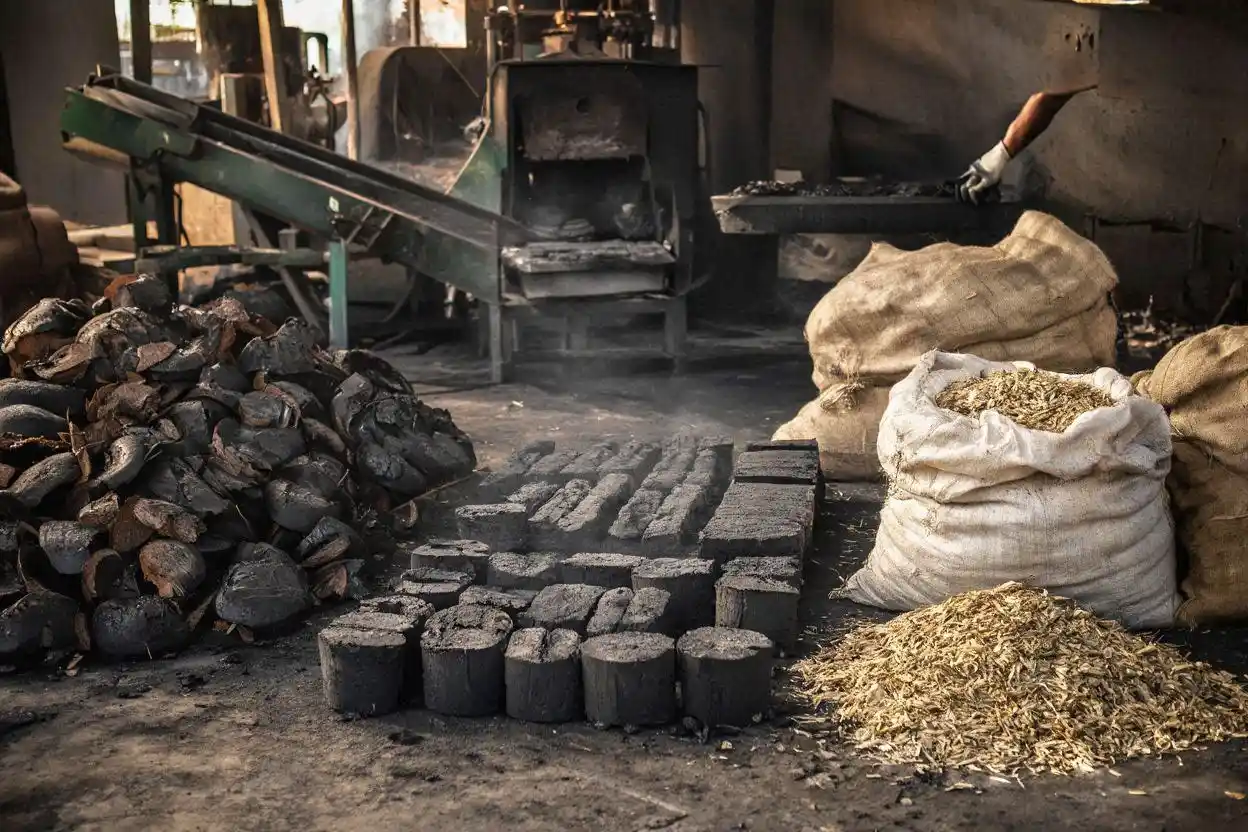
Agricultural activities produce large amounts of organic residue every year. Farmers often discard or burn these materials, which increases environmental pollution. Therefore, agricultural waste charcoal utilization offers an effective method to transform unused biomass into valuable resources.
This process converts agricultural byproducts into charcoal through controlled heating. As a result, the material becomes more stable and functional for various industries. Many entrepreneurs now explore this method because it supports sustainability and generates additional income.
Types of Materials for Agricultural Charcoal Utilization
Different agricultural residues can produce high-quality charcoal. Each material offers unique characteristics depending on its fiber density and moisture content. Consequently, selecting suitable raw materials improves production efficiency.
Common agricultural waste sources include:
-
Rice husks
-
Corn cobs
-
Coconut shells
-
Palm kernel shells
-
Sugarcane bagasse
Among these materials, coconut shells often produce durable and high-density charcoal. Many industries prefer this material because it burns longer and generates less smoke. Businesses interested in coconut shell waste charcoal utilization frequently develop export-quality charcoal products.
Industrial Functions of Agricultural Waste Charcoal
Agricultural waste charcoal utilization supports multiple sectors. Manufacturers use charcoal not only as fuel but also as a raw material for innovative products. This versatility increases its commercial value significantly.
Several industries use agricultural charcoal for:
-
Household and industrial fuel
-
Water and air filtration
-
Soil improvement and fertilizer additives
-
Activated carbon production
-
Barbecue and cooking briquettes
Moreover, activated charcoal has become highly popular in environmental management. Companies utilize it to absorb toxins and improve filtration systems. Consequently, demand continues to increase in both domestic and international markets.
Production Design in Charcoal Utilization
Producers must design efficient processing systems to maintain product quality. Modern charcoal production typically uses kiln or furnace technology. These systems control temperature and oxygen levels during carbonization.
There are several common production designs:
-
Traditional earth kiln
-
Drum carbonization system
-
Brick kiln structure
-
Continuous furnace technology
Traditional methods require lower investment but produce inconsistent quality. On the other hand, modern furnace systems generate uniform charcoal and increase production capacity. Many small businesses start with simple equipment and gradually upgrade their facilities.
Additionally, production design affects emission levels and operational costs. Entrepreneurs often study references from janganpusing.com to explore practical business insights and development strategies.
Economic Benefits of Charcoal Waste Utilization
Agricultural waste charcoal utilization delivers strong economic opportunities. Farmers and small enterprises can convert waste materials into marketable products. As a result, they create additional revenue streams without large capital investment.
Environmentally, this practice reduces agricultural waste accumulation. It also minimizes open burning that releases harmful emissions. Furthermore, charcoal byproducts such as biochar improve soil fertility and water retention.
Communities adopting charcoal utilization often experience better resource efficiency. This practice also encourages circular economy principles. Therefore, governments and environmental organizations continue promoting sustainable charcoal production.
Future Opportunities in Charcoal Utilization
Global demand for eco-friendly products continues to grow. Agricultural charcoal products align with sustainability trends and renewable resource development. Many startups now focus on exporting briquettes and activated charcoal.
Technological advancements also improve production efficiency and product consistency. Entrepreneurs who invest in research and innovation gain stronger competitiveness. Consequently, agricultural charcoal businesses show strong long-term potential.
Conclusion
Work uniforms provide a professional identity for companies. In addition, uniforms create a consistent appearance among employees, which helps build a neat and trustworthy impression. Uniforms also strengthen brand image and encourage a stronger sense of teamwork within the workplace.
By implementing work uniforms, companies can develop a more disciplined and organized work culture. Customers can easily recognize employees, which improves service efficiency. Therefore, work uniforms play an important role in supporting overall corporate professionalism.
